

 Victoria Nino
September 16, 2026
Victoria Nino
September 16, 2026

Victoria is a two-time mother through egg donation, the founder of Infertility Unfiltered and the author of Our Hearts Match, a children's book about donor conception. Below, Victoria shares how she worked through the fear that her child wouldn't look like her before deciding to use donor eggs.
Will my baby look like me if I use donor eggs?
Before conceiving, I was so concerned with the chance that my baby might not look like me because I was using donor eggs. I feel so incredibly silly saying this out loud now because after having my daughter, I realized how irrelevant physical traits are to our attachment and love for each other.
Without her having my DNA, I still see so many parts of myself in her...
During pregnancy, most women wonder and visualize what their unborn child will look like. They wonder - will he/she have my eyes? Or, my smile? Will he/she be tall like me? I didn’t get to wonder about those things. Sure, I wondered what my baby would look like, but I didn’t wonder if she would have my smile or my eyes. I wondered if she would have my donor's eyes or my husband's. That used to make me sad, but not anymore. Now, I know that there are far more ways to connect with your donor egg pregnancy/baby that have nothing to do with DNA.
Why does losing a genetic link to your family feel so hard?
I grew up in a family that was very proud of its genetics. Not because they were great, or superior, but because they were quirky and weird - because they were ours. They belonged to our family. From professional burping abilities to our allergies to literally everything, and not to forget our French and German heritage that we were told was in our blood, yet we knew nothing about - we were still taught to be proud of it. I never thought for a second that I wouldn’t get to pass on my family’s genetics to my child one day. They were mine to give, it was my given right.
So I thought.
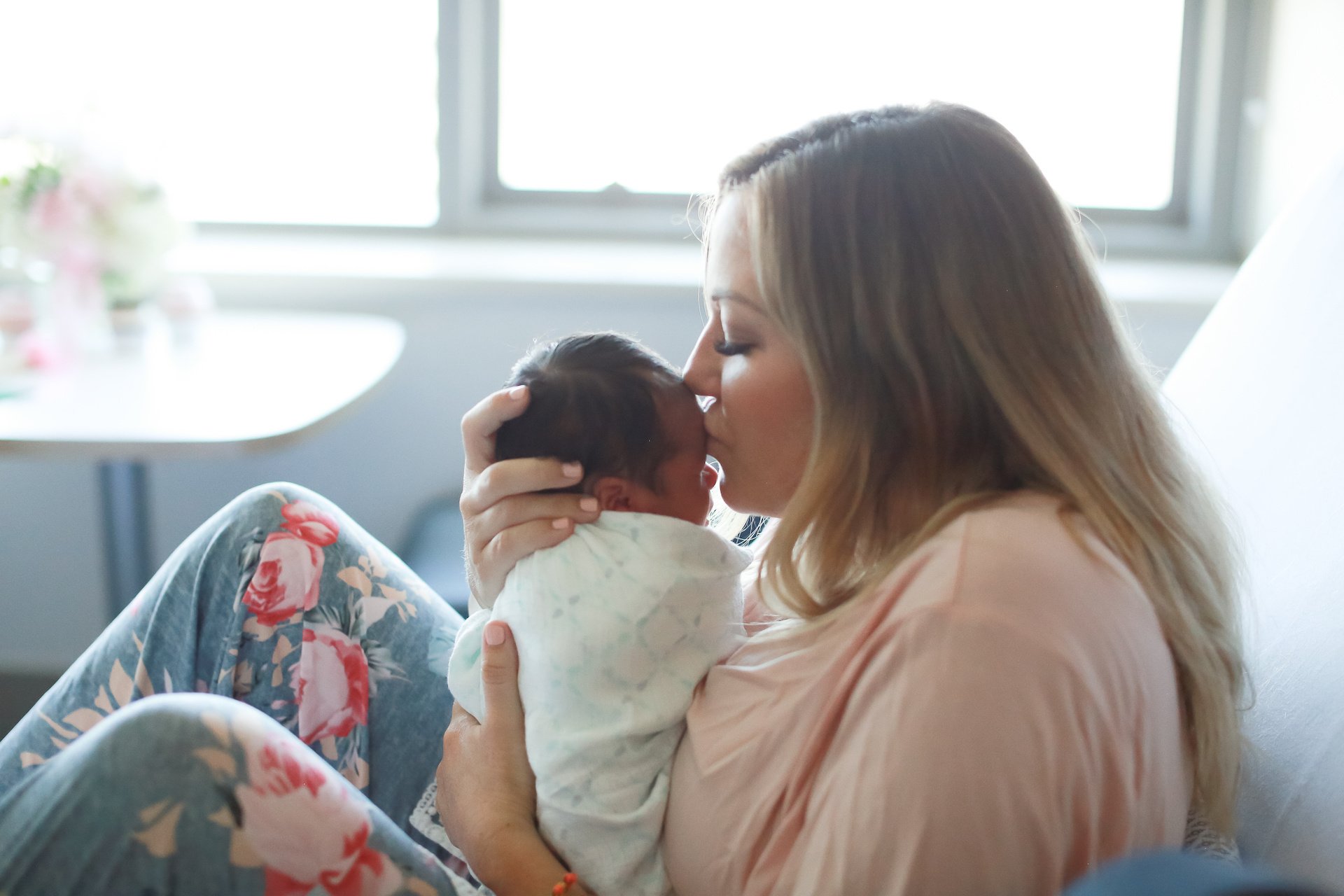
Is it normal to grieve your genetics when using donor eggs?
Because my DNA was praised growing up, subconsciously, I thought I needed my baby to have my genetics to bond. It was what knitted my family together, so it only made sense that I’d need to pass these things on for the love to exist as mother and child and for my child to be accepted as one of us. It was a belief that was ingrained in my brain at an early age.
So, of course, I would have doubts when the script flipped. It's all about perspective.
If my parents had adopted me or used donor conception to conceive me, I would have learned at a young age that genetics isn’t the primary force of love within a family. I would bet that I wouldn’t have had the same fears I had when I first pursued donor eggs because my core belief system would have been different.
Changing my perspective
Before getting pregnant, I knew I had to change my perspective if I was going to be able to move forward with donor eggs. I knew I had to look at this situation differently than what I had been taught. If I had to give credit to the biggest thing that helped me do that, I would say it was when my doctor first explained epigenetics to me.
Learning about epigenetics
My doctor explained that epigenetics can change the way your genes are expressed. Had my daughter's fetus grown in the donor's womb, she wouldn't be the same person. Just like if you plant the same grape tree in a different region of Napa Valley, you’d get a very different wine.
Without me, she would not be her. This allowed me to find a new way to connect with my baby and find my way to my identity as a mother via egg donation.
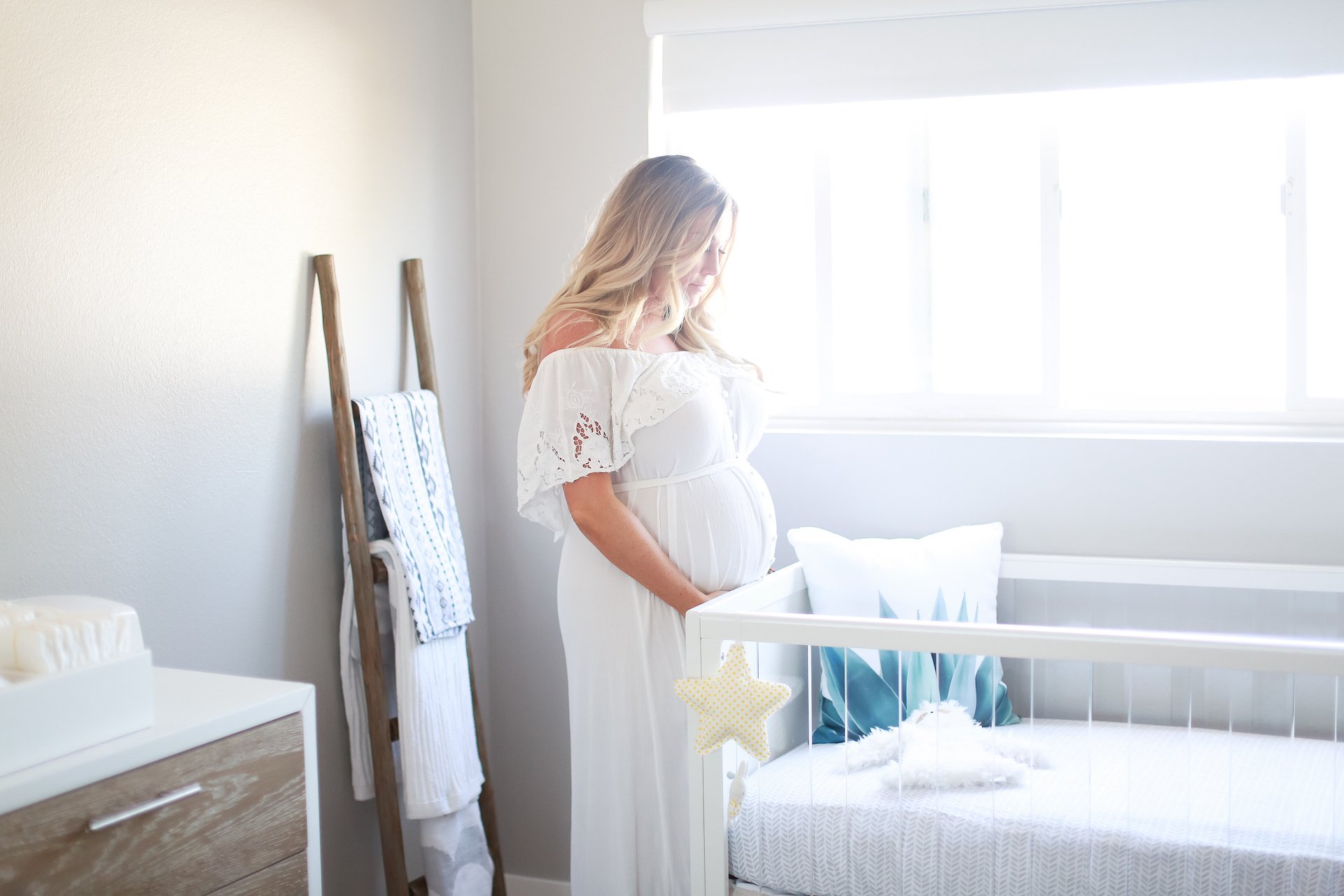
Genotype vs. phenotype: how your baby can still take after you
With all this being said, your baby can look like you, even if you use donor eggs. Many things are biologically imprinted on your baby’s fetus during the development of his/her gene expression while in your womb, and you have a lot of epigenetic influence before and after your baby is born.

I call it Mama Magic.
We all have a genotype and a phenotype. Genotype is the genetic code found in our cells that is shown through things like eye color, hair color, and height.
A phenotype is the expression of the genotype that makes you uniquely you. The little quirks about you that people who know you well can see. Phenotype is who you are, how you feel, and how you operate. Things like facial expressions, personality traits, sensitivities, and even your scent.
Two people can have the same genotype but different phenotypes because of their environment
If you know any identical twins, you know that they each have unique traits that make them, them.
Our donor gave my daughter her cute button nose, but the mama magic is how she scrunches it when she’s mad. Her dada gave her the shape of her beautiful lips, but it’s the mama magic that comes through in her smile.
It’s a uniquely special bond we have to each other - a biological connection beyond genetics.
If you have a partner or spouse, chances are you don’t look alike, but you still love each other and have a strong bond, right? Or, what about your dog or cat? You love them like your babies, yet don’t share any DNA. We all have proof in our lives that DNA isn’t required to bond or attach to someone.
We honor and celebrate all parts of her — the parts that she gets from the egg donor, the parts she gets from her father, and the parts she gets from me. It’s talked about very openly in our house and always will be. For the record, my daughter currently holds the title of “Best Burper” in my family, and we couldn’t be more proud.
Does your baby need to look like you for you to bond?
I know now that I never needed to share DNA or have a biological connection through epigenetics to bond or love my daughter. I didn’t need her to look like me or be like me.
I just needed her to be her - the one and only her.
What does a baby conceived with donor eggs inherit from the donor, and what comes from you?
A baby conceived with donor eggs inherits their DNA from the egg donor and the sperm provider, so most physical features trace back to those genes. Your pregnancy influences how those genes are switched on during development, and the way you raise your child shapes the expressions, habits and humor that make a family resemblance easy to see.
| What your baby gets | Where it comes from | What it means for resemblance |
|---|---|---|
| Eye color, hair color and skin tone | DNA from the egg donor and sperm provider | Mostly set by genes, which is why many parents look for a donor with similar characteristics to the mother |
| Height and face shape | DNA from the egg donor and sperm provider, with nutrition and health affecting growth | Genes set the general range, and health before and after birth affects growth within it |
| Signals that turn genes up or down during development | Your uterus and your pregnancy (epigenetics) | Shapes growth and health tendencies, though it is unlikely to change features like eye color |
| Nutrients, oxygen, hormones and antibodies | Your body, through the placenta | Builds and protects your baby for nine months |
| Facial expressions, gestures, speech patterns and family humor | Largely picked up from the people who raise your child | Often where parents notice the strongest resemblance as children grow |
Resemblance is never guaranteed, even between children and the parents who share their DNA, because each child inherits a different mix of genes. For the science of how pregnancy shapes gene expression, see epigenetics and donor eggs.
Can you choose an egg donor who looks like you?
Yes. Many intended parents look for an egg donor who shares their ethnicity, eye color and hair color, and Donor Nexus lets you filter donor profiles by these characteristics.
Many donors also record a video for their profile, which gives you a sense of their expressions and personality, and you can request a Zoom call with your donor before confirming the match. Choosing a donor with similar features raises the odds of a physical resemblance, although the sperm provider's genes and the random mix every child inherits mean no match can promise one.
Frequently asked questions about donor eggs and resemblance
Will my baby look like me if I use donor eggs?
Your baby may share some of your features, especially if you choose an egg donor with similar features, but physical traits like eye color come from the DNA of the egg donor and sperm provider. Your pregnancy shapes how those genes are expressed, and many mothers see their own expressions and mannerisms in their children.
Can a baby conceived with donor eggs resemble the mother who carried them?
Yes, in many ways. Choosing a donor with similar features can lead to a physical likeness, and children also pick up expressions, gestures and ways of speaking from the parent who raises them, which is often where people notice the resemblance first. For instance, Victoria sees herself in how her daughter smiles and scrunches her nose.
What if my baby looks nothing like me?
This can happen in families where everyone shares DNA, since every child inherits a different mix of genes. Long-term studies of families formed through egg donation have found close, positive parent-child relationships. If losing a genetic link still feels heavy, Victoria's post on grieving genetics may help.
Does my baby have any of my DNA if I use donor eggs?
No. Your baby's DNA comes from the egg donor and the sperm provider, so you are not genetically related, but you are biologically connected through pregnancy. Your body supplies the nutrients, hormones and uterine environment that influence how your baby's genes are expressed, which our guide to epigenetics and donor eggs explains in detail.
If you donate your eggs, will the baby look like you?
The child may share some of your features, since half of their DNA comes from your egg and the other half comes from the sperm provider. The pregnancy and the family who raises the child shape the rest, including many expressions and habits. Our post for donors on whether the child is biologically yours covers this in more depth.
- Grieving the Genetic Child I Imagined and Meeting the One Meant For Me
- 7 Ways I Learned to Cope With Infertility Grief
- Should I Use Donor Eggs? Will I Have Any Regrets?
- What I've Learned From Choosing an Egg Donor 3 Times
- 10 Tips for Bonding With Your Baby
- A Heartfelt Letter to Every DEIVF Mama-To-Be

Victoria Nino
Victoria Nino is the founder of Infertility Unfiltered, an education and support platform for women facing infertility and considering donor conception, and she writes at Expecting Anything. She is the author o…

Ready for the next step?
If you are ready to get started or just need more info, contact us today.