

 Lucy Solie-Vilker
May 2, 2025

If you meet the egg donor requirements and are wondering what carrier screening means, the Punnett Square you may remember from science class is a helpful way to understand recessive genes.
What is a Recessive Gene?
Remember in science class when you learned about the Punnett Square? The teacher likely used the example of what eye color the child could inherit from their parents. For example, if one of your parents had blue eyes and the other had brown, you have a 50% chance of either having brown or blue eyes based on the Punnett Square.
The little b stands for a recessive gene and the big B for a dominant gene, so whenever a big B is present, the child is likely to have brown eyes.
Genetic Carrier Screening for Egg Donors
The same method is used when an egg donor is screened for what genes they carry. Multiple tests can be used to screen your genes, such as Invitae, SEMA4, Myriad, and Horizon.
You and the sperm provider will be screened using the same kit to ensure that you do not carry the same recessive genes.
If you become an egg donor and choose an egg banking cycle for our frozen egg bank, you will be screened for 289 genes using an Invitae spit kit. It takes two to three weeks to get your results back.
For example, some genes that are screened for are Tay Sachs Disease and Cystic Fibrosis.
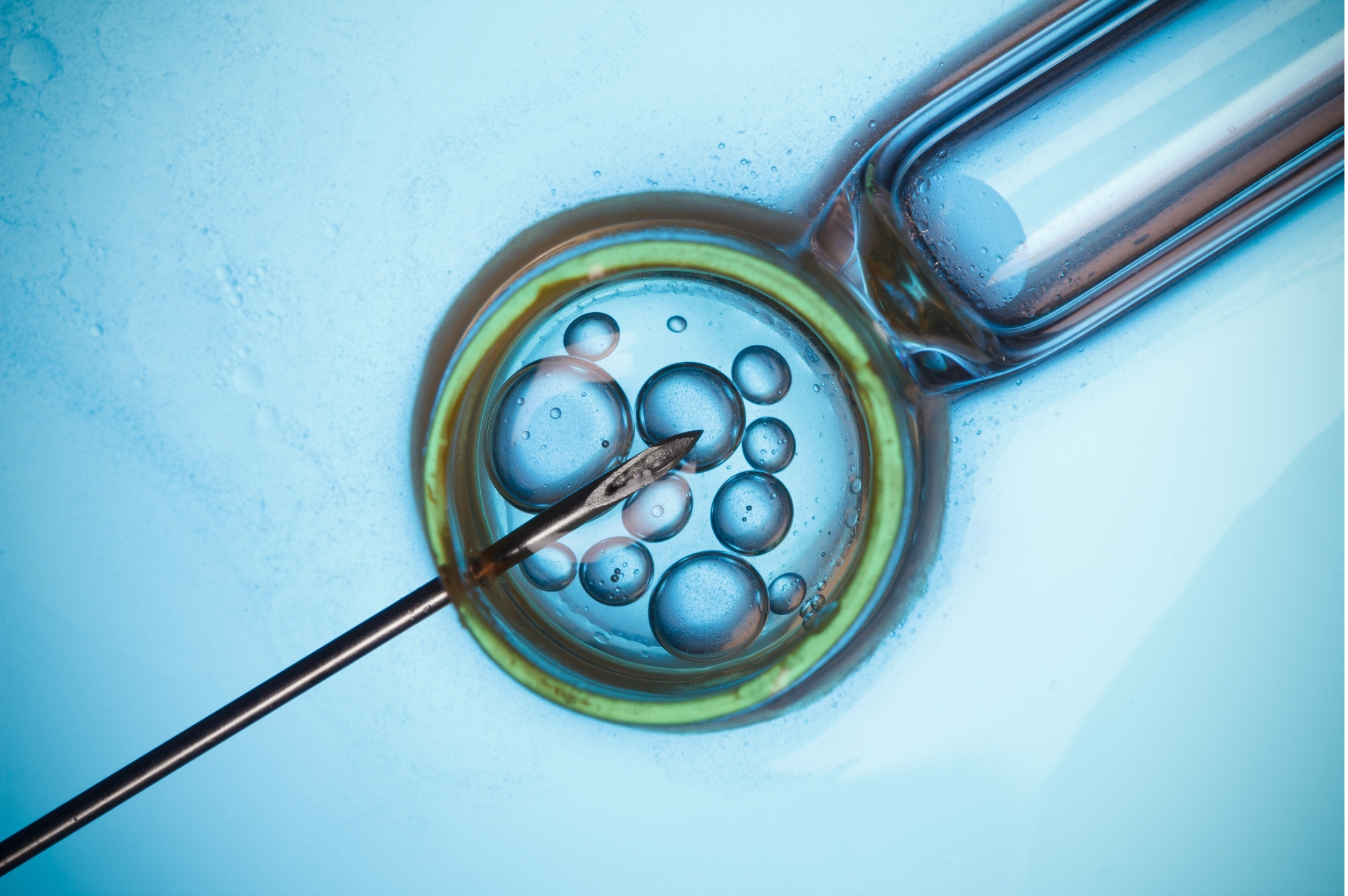
If your results come back positive for any of the genes screened, please don’t worry, because it doesn’t mean you have the disorder or the disease, only that you are a carrier of the recessive gene.
Here is a Punnett Square that demonstrates if an egg and sperm donor both carry a recessive gene for Cystic Fibrosis.
There would be a 25% chance that the child would be unaffected and would not be a carrier of the gene.
There would be a 50% chance that the child is also a carrier of the gene.
There would be a 25% chance that the child would have Cystic Fibrosis.
This is why the clinic determines an egg donor is not genetically compatible if they carry the same recessive gene as the sperm provider, since that pairing would put the child at risk of being affected.
Learning More About Your Own Genetics
One benefit of being an egg donor is that you learn all of this about your genetics at no cost, which can help if you decide to have a child of your own someday.
Additional Resources:
Additional Egg Donor Videos:
- A Day in the Life of an Egg Donor Video Series
- What to Expect From the Egg Retrieval Procedure
- Advice for First-Time Egg Donors
- Why I Became An Egg Donor
- “To Make A Miracle”: My Egg Donation Experience Q&A
If you're exploring donor eggs, our guides to using donor eggs, how our egg donor agency works and our frozen donor egg bank walk through each path, and you can create an account to search the egg donor database whenever you're ready.
Disclaimer
This article is general information and is not medical advice. Talk with your physician and fertility clinic about your own care.
Related reading




Lucy Solie-Vilker
Lucy Solie-Vilker is the CEO of Donor Nexus, where she's helped build one of the most established platforms in egg and embryo donation. Since 2012, her work has contributed to more than 2,000 babies born to Don…

Ready for the next step?
If you are ready to get started or just need more info, contact us today.